Men’s Kurta Pajama : Styles, Fabrics & Occasions
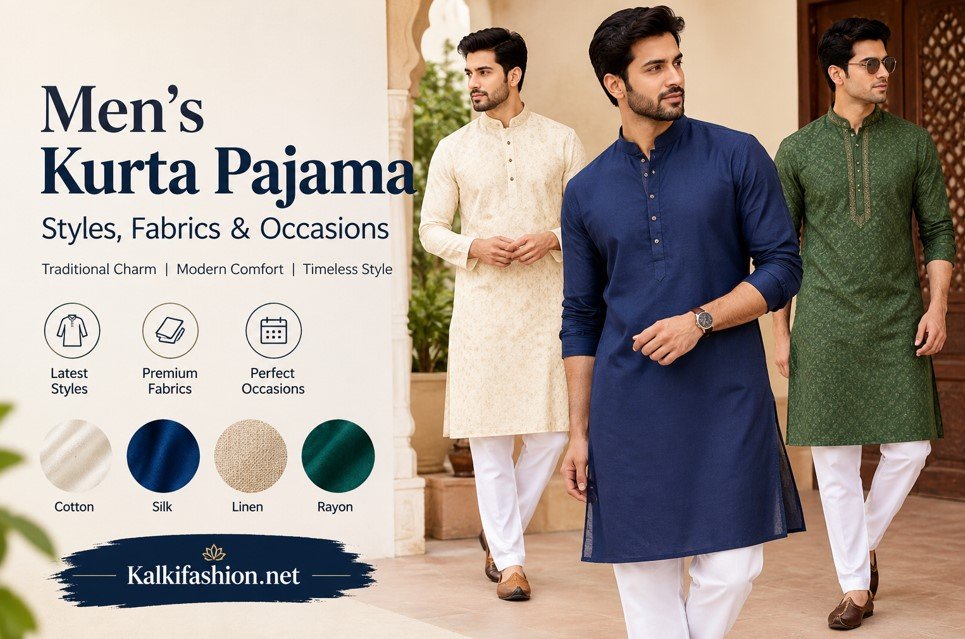
The kurta pajama is the undisputed king of Indian ethnic wear. For generations, this simple, elegant two-piece garment has defined men’s traditional fashion across the Indian subcontinent. Whether you are attending a grand Diwali celebration, walking down the aisle as a groom, or simply lounging at home on a Sunday morning, there is a specific style of kurta pajama built exactly for that moment.
Unlike western suits that can feel stiff and restrictive, the beauty of this traditional attire lies in its absolute comfort. The loose-fitting tunic paired with a lightweight bottom allows your skin to breathe, making it the perfect garment for India’s diverse climate. But today, this outfit is no longer just a basic set of clothing. Top Indian fashion designers have transformed it into a global style statement.
If you want to upgrade your ethnic wardrobe, you need to know more than just your shirt size. You need to understand fabric drape, regional cuts, color coordination, and proper accessorizing. This comprehensive guide covers everything you need to know to buy, style, and maintain the perfect kurta pajama.
The Evolution of the Kurta Pajama in Indian Fashion
To truly appreciate your traditional clothing, you need to understand where it comes from. The origins of the kurta trace back thousands of years. The word itself comes from the Persian word kurta, which translates to a collarless shirt.
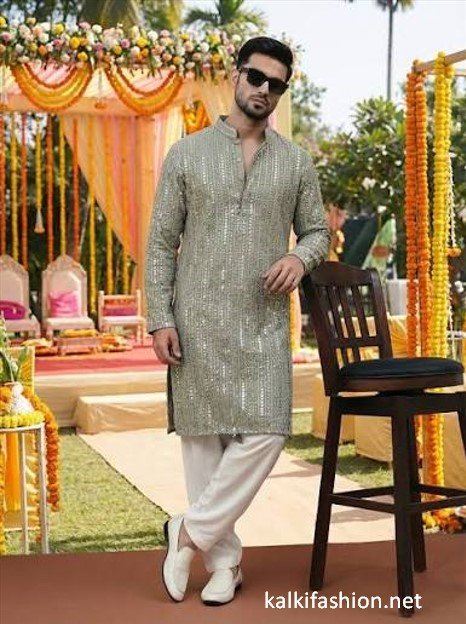
During the reign of the Mughal Empire, the garment saw its first major fashion evolution. Mughal emperors and noblemen wore heavily embroidered, luxurious kurtas made from imported silks and fine muslins. These garments featured intricate gold and silver threadwork, known as zardozi. The pajamas (from the Persian pae jama, meaning leg garment) were tied with a drawstring at the waist.
Fast forward to the Indian independence movement, and the garment took on a completely new meaning. Freedom fighters championed Khadi, a hand-spun cotton cloth. The Khadi kurta became a symbol of resistance, simplicity, and self-reliance. It stripped away the royal extravagance and brought the garment back to the common man.
Today, we see a beautiful blend of both eras. Bollywood celebrities and modern fashion houses have taken the basic silhouette and elevated it. You can easily find simple, earth-toned cotton sets sitting on the same retail shelf as heavy, sequin-studded velvet ensembles. It remains a garment that bridges the gap between ancient heritage and modern luxury.
Not all kurtas are created equal. The cut, length, and silhouette define the entire vibe of your outfit. Here are the most popular styles available in the Indian market today.
Your choice of fabric determines both your comfort and how formal the outfit looks. Selecting the wrong material for the weather or the event is the most common mistake men make.
To look your best, your clothing must work with your natural proportions, not against them.
- Tall and Lean: You can easily pull off heavily draped kurtas, bold horizontal prints, and lighter colors. A classic churidar works well to highlight your height. Avoid completely monochromatic dark outfits, as they can make you look overly thin.
- Short and Stocky: Stick to solid colors and straight cuts. Avoid heavy fabrics like velvet that add bulk. A monotone outfit (matching your kurta and pajama exactly) creates a vertical visual line, making you appear taller. Avoid large prints; opt for small motifs or solid shades.
- Athletic Build: The Pathani suit was practically made for you. It highlights broad shoulders and a narrow waist. You can also wear fitted straight cuts. Avoid overly baggy pajamas, which can hide your physique.
- Plus Size: Choose lightweight, dark-colored fabrics like raw silk or fine cotton. A straight cut that skims the body without clinging is perfect. Pair your outfit with a structured Nehru jacket—the jacket hides the belly and sharpens the shoulder line instantly.
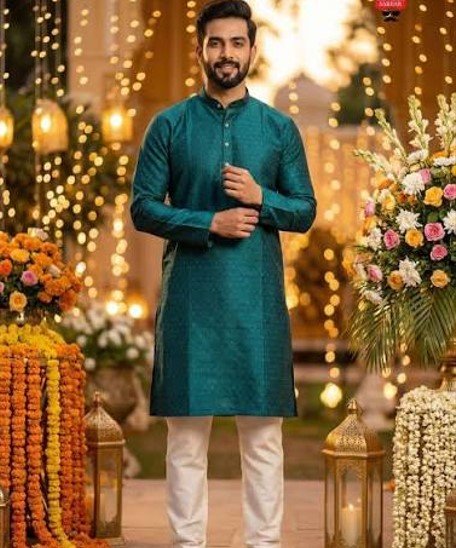
Knowing the unwritten dress codes for Indian events will save you from being over-dressed or under-dressed.
- The Haldi and Mehndi Ceremonies
These are daytime, fun, and messy events. Heavy silks will look completely out of place here.
- Your Go-To: A bright yellow, mustard, mint green, or peach cotton or Chikankari kurta. Pair it with a white cotton pajama. Roll up the sleeves for a relaxed, festive look.
- The Sangeet or Cocktail Night
This is where you want to look sharp, modern, and ready to dance.
- Your Go-To: A dark, jewel-toned asymmetric kurta. Think deep emerald green, midnight blue, or wine red. Pair it with tailored black trousers or a fitted churidar, and add a metallic brooch.
- The Wedding Day
If you are attending as a guest, you need to look formal without upstaging the groom.
- Your Go-To: A Banarasi silk or raw silk kurta pajama. Layer it with a contrasting, heavily embroidered Nehru jacket. For example, a cream silk base with a dark maroon floral jacket.
- Casual Festivals and Family Pujas
For small home events, comfort is your main priority.
- Your Go-To: A simple short kurta (ending mid-thigh) worn over a pair of clean, dark denim jeans or a comfortable straight cotton pajama.
India’s diversity is brilliantly reflected in its traditional clothing. The basic two-piece outfit transforms as you cross state borders.
- The Bengali Panjabi: In West Bengal, the kurta is famously called the Panjabi. It is typically shorter, tailored very close to the body, and often features beautiful Kantha embroidery. Bengali men traditional pair it with a flowing white Dhoti rather than a pajama, especially during Durga Puja.
- The Punjabi Muktsari: Named after the city of Muktsar, this style is characterized by its crisp, stiff collar, hidden button placket, and a slightly shorter length. It is always worn with a heavily pleated, comfortable pajama and is famous for its exceptionally neat stitching.
- The South Indian Style: In states like Tamil Nadu and Kerala, men prefer plain, high-quality white or cream silk kurtas. Instead of a pajama, they pair it with a traditional Veshti or Mundu (a white wrap-around lower garment with a gold border).
A basic kurta pajama is just the foundation. Accessories are the building blocks that take your outfit from average to expert-level.
- The Nehru Jacket (Modi Jacket): This is the ultimate layering piece. A well-fitted sleeveless jacket immediately adds structure to your torso. Rule of thumb: If your kurta is printed, wear a solid jacket. If your kurta is solid, experiment with a printed or textured jacket.
- Footwear: Mojaris and Kolhapuris: Never wear athletic sneakers with traditional Indian wear. Invest in a good pair of leather Mojaris (traditional slip-on shoes) or Kolhapuri chappals (strappy leather sandals). If you want a fusion look, suede loafers or clean leather brogues also work exceptionally well.
- The Pocket Square: If you are wearing a jacket, a silk pocket square adds a pop of contrasting color. Fold it cleanly in a straight presidential fold for formal events, or a messy puff fold for parties.
- The Dupatta: For high-end weddings, carrying a matching or contrasting velvet or silk stole over one shoulder adds a distinct royal touch.
- Grooming and Accents: A classic analog watch with a leather strap is mandatory. For groomsmen, adding a subtle pearl mala (necklace) or a metallic lapel pin on the jacket elevates the entire ensemble.
When shopping, you will constantly face the dilemma of buying off-the-rack versus visiting a tailor. Here is a breakdown to help you decide.
| Feature | Ready-Made Kurta Pajama | Custom Tailored Kurta Pajama |
| Fit | Standardized (Small, Medium, Large). May require minor alterations. | Perfect fit. Measured exactly to your shoulder, chest, and waist dimensions. |
| Convenience | High. You can buy it and wear it the exact same day. | Low. Requires multiple visits for measurements and trials over 1-2 weeks. |
| Fabric Choice | Limited to what the brand has produced for that specific season. | Unlimited. You can buy raw fabric from any market and design it yourself. |
| Cost | Ranges from highly affordable to very expensive (designer labels). | Usually involves the cost of raw fabric plus the tailor’s stitching fee. |
| Customization | Zero. You get exactly what is on the hanger. | High. You choose the collar style, buttons, pocket placement, and hem length. |
Every garment has its strengths and weaknesses. Here is an honest look at traditional Indian menswear.
Pros:
- Ultimate Comfort: The loose fit allows for excellent air circulation, making it far more comfortable than a tight Western suit.
- High Versatility: You can mix and match tops and bottoms. You can wear the kurta with jeans, or the jacket with a formal shirt.
- Culturally Appropriate: It shows respect for tradition and fits perfectly into any Indian religious or festive setting.
- Flattering: When cut correctly, it hides stomach bulk and flatters a wide variety of male body shapes.
Cons:
- High Maintenance Fabrics: Silk and linen require careful dry-cleaning and precise ironing.
- Mobility Issues: If the armholes are cut too high or the shoulder seam is too tight, it can restrict your arm movement.
- Pajama Drawstrings: Traditional cotton string ties can loosen or knot tightly. Replacing them with elastic waistbands is a modern, necessary upgrade.
If you spend good money on ethnic wear, you need to maintain it. Indian fabrics require special attention compared to your regular t-shirts and jeans.
Washing Rules:
Never throw an embroidered or silk kurta into a harsh washing machine cycle.
- Cottons and Linens: Wash these gently in cold water. Hot water will shrink natural cotton fibers. Use a mild liquid detergent.
- Silks, Jacquards, and Velvets: These are strict dry-clean-only materials. Water washing will ruin the sheen of silk and crush the pile of velvet.
Drying and Ironing:
Always dry brightly colored ethnic wear in the shade. Direct Indian sunlight will bleach and fade deep reds, blues, and greens within a few hours.
When ironing, turn the garment inside out, especially if it has threadwork or sequins. For silk, use the lowest heat setting on your iron and place a thin cotton cloth between the iron and the garment to prevent burning.
Storage:
Store heavy ethnic wear in breathable cotton garment bags, not plastic covers. Plastic traps moisture and causes fungal growth (mildew) during the monsoon season. For expensive silks, keep a few dried neem leaves or mothballs in your wardrobe to keep insects away.
Frequently Asked Questions
1. Can I wear a kurta pajama with shoes?
Yes, but the type of shoe matters. Avoid running shoes or thick-soled sneakers. Opt for traditional Mojaris, Juttis, Kolhapuris, or Western-style leather loafers and Oxford shoes.
2. What is the exact difference between a churidar and a regular pajama?
A standard pajama is cut straight and fits loosely around the legs and ankles. A churidar is cut much longer than your leg and tapers tightly from the knee down. The extra fabric gathers at the ankle, creating “churis” (rings or bangles).
3. Which fabric is best for a summer wedding?
For daytime summer weddings, stick to Chikankari on lightweight georgette, or premium linen. If it is an evening summer wedding, a light raw silk is acceptable as it breathes reasonably well while looking formal.
4. How long should a classic men’s kurta be?
A traditional straight-cut kurta should end exactly at your knees or about one to two inches below the knee. Anything shorter becomes a “short kurta” (which belongs with jeans), and anything reaching the calves looks disproportionate on most men.
5. Can I wear a kurta with jeans?
Absolutely. This is the definitive “Indo-Western casual” look. A solid short or mid-length cotton kurta paired with blue or black denim is perfect for college events, casual Fridays at work, or airport travel.
6. How do I stop my pure cotton kurta from shrinking?
Pure cotton naturally shrinks by about 2-5% after the first wash. To minimize this, only wash it in cold water and never put it in a heated tumble dryer. Hang it to air dry naturally.
7. Is a Nehru jacket strictly necessary?
It is not strictly necessary, but it is highly recommended for formal events. A jacket elevates the outfit, hides wrinkles on the shirt underneath, and provides functional pockets for your phone and wallet.
8. What color kurta is best for a nighttime event?
Nighttime lighting washes out pastel colors. Choose deep, rich shades like midnight blue, emerald green, wine/burgundy, deep mustard, or classic black. Metallic accents (gold or silver buttons) look excellent at night.
9. How tight should a pajama be around the waist?
It should sit comfortably on your natural waist (near the belly button). If you are using a traditional drawstring, ensure it is tied securely but allows two fingers of breathing room. For maximum comfort, buy pajamas with a half-elastic, half-drawstring waistband.
10. Can short men wear asymmetric styles?
Yes, but with caution. If the asymmetry is too drastic, it can overwhelm a shorter frame. Opt for a subtle diagonal cut and ensure the outfit is monochromatic (the top and bottom are the same color) to create an illusion of height.
Conclusion
The kurta pajama is much more than a traditional uniform; it is a canvas for personal expression. From the breathable cotton weaves perfect for a humid summer afternoon to the heavy, regal silks worn by grooms on their wedding day, mastering this garment guarantees you will always look impeccably dressed.
Remember, the secret to pulling off this classic Indian attire lies in the details. Focus on buying the right fabric for the season, ensure the shoulders and length are tailored to your specific body type, and never underestimate the power of good footwear and a well-fitted Nehru jacket. Step out of your comfort zone, experiment with new colors like pastels or rich jewel tones, and embrace the effortless elegance of traditional menswear.